
Table of Contents
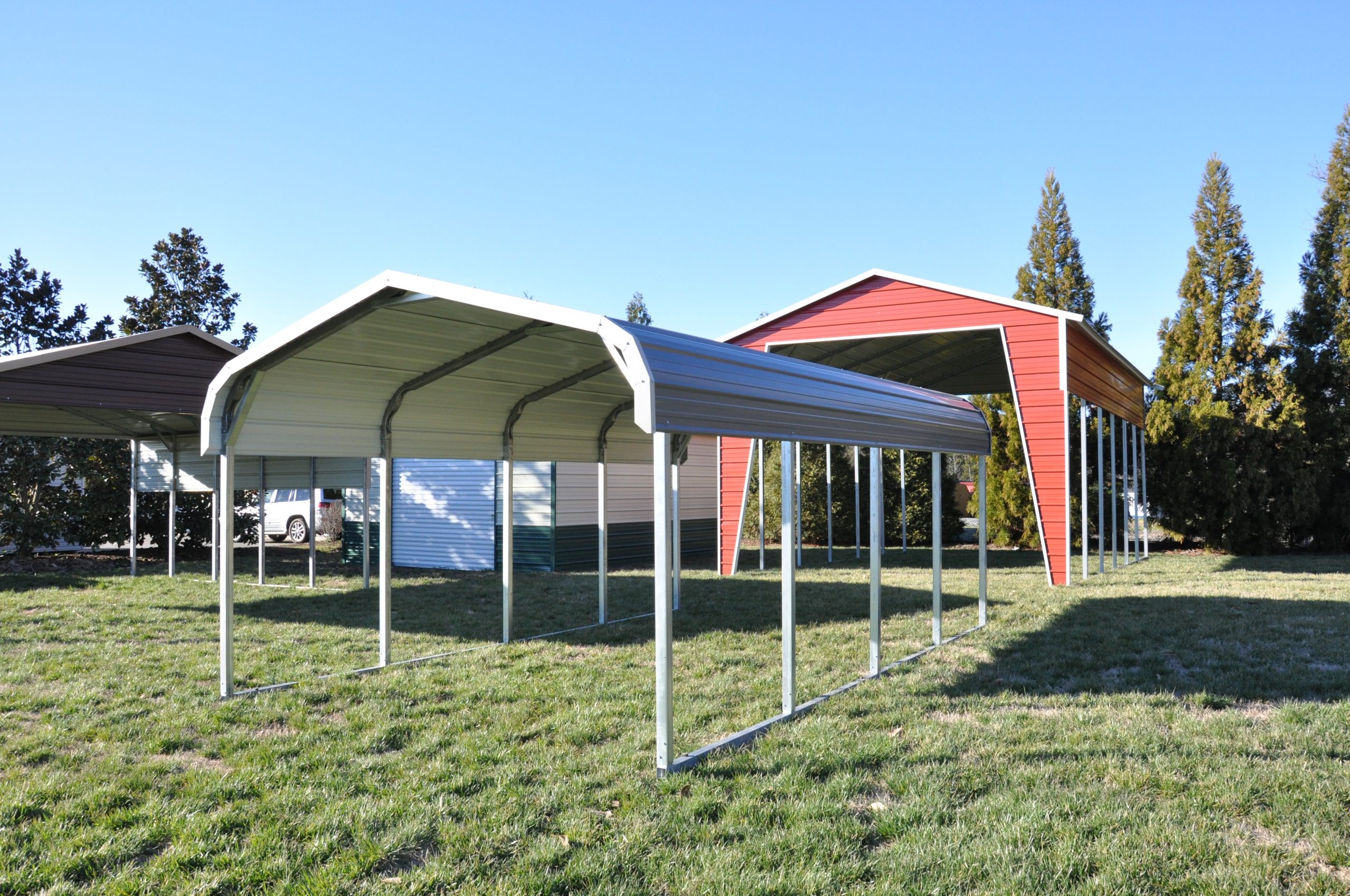
How Do You Measure RV Height Before Ordering a Metal Cover?
To measure RV height for a cover, park the vehicle on level ground and measure from the surface beneath the tires to its highest fixed point. This may be the rooftop air conditioner, antenna, satellite equipment, or another roof accessory. Use the RV’s normal entry configuration and compare its maximum height with the cover’s lowest usable clearance.
When comparing metal RV covers, do not assume that the advertised leg height or roof peak provides the same amount of clearance throughout the structure. Roof framing, braces, and changes in driveway elevation can affect the available space. Accurate measurements help prevent clearance problems before installation.
Where Should You Measure an RV?
The correct RV height measurement runs vertically from the ground to the highest point of the vehicle, including permanently installed rooftop equipment.
This is different from measuring only the body or roofline.
An RV may have several raised components across its roof, making it important to identify the tallest point rather than relying on the roof’s general height.
Start With a Level Surface
Position the RV on firm, level ground before measuring.
A level surface provides a consistent reference and helps avoid misleading measurements caused by the vehicle sitting at an angle.
For a motorhome, measure the vehicle in the suspension configuration used when entering the cover.
For a travel trailer or fifth wheel, the correct configuration depends on whether the measurement is intended to represent its towing height or its stationary storage position.
The RV should be secured according to the manufacturer’s instructions before measurements begin.
Identify the Highest Fixed Point
Examine the roof from a safe location to determine which component extends furthest above the ground.
Potential high points include the air conditioner, satellite dome, raised roof section, or permanently mounted accessory.
If the rooftop air conditioner is the highest point, the measurement must reach the top of its housing rather than stopping at the surrounding roof.
Use a suitable laser measuring tool, level reference, or professional measurement service when direct access is difficult.
Avoid climbing onto the roof unless the manufacturer permits roof access and proper fall protection is available.
Record the Measurement in Feet and Inches
Write down the complete height instead of rounding to the nearest foot.
For example, an RV measuring 12 feet, 5 inches should not be treated as a 12-foot vehicle.
Those additional inches can determine whether the RV passes safely beneath the cover’s framing.
Record the measurement alongside the RV’s make, model, year, and installed accessories.
This information will help the supplier evaluate the proposed cover.
Which Roof Accessories Must Be Included?
Roof accessories are among the most common reasons an RV’s actual height differs from its published specifications.
An RV manufacturer may include certain factory-installed equipment in its listed exterior height, while optional or aftermarket accessories may not be included.
Always check how the manufacturer defines the specification before relying on it.
Rooftop Air Conditioning Units
The RV air conditioner height is particularly important because rooftop units often extend above the surrounding roof.
Different air conditioner models have different housing profiles.
A low-profile unit may have a smaller vertical dimension than a conventional rooftop unit, but the exact difference depends on the model.
Measure the complete installed height rather than adding an assumed number of inches to the roofline.
If the RV has multiple air conditioning units, identify which one reaches the highest point.
Antennas, Satellite Equipment, and Solar Panels
Other roof-mounted equipment may affect clearance.
Check for:
-
Antennas: Fixed antennas and equipment that remains raised during entry.
-
Satellite domes: Permanently mounted housings that extend above the roof.
-
Solar panels: Panels, mounting brackets, and elevated frames.
-
Roof vents: Raised protective covers or vent assemblies.
-
Roof racks: Permanent racks and accessories attached to them.
-
Additional equipment: Light fixtures, cargo carriers, or specialty components.
Not every accessory will determine the final height.
The important measurement is the tallest component in the configuration used when entering the shelter.
Should Retractable Equipment Be Included?
Retractable antennas, awnings, and other movable accessories require separate consideration.
If an antenna must be lowered before driving, follow the manufacturer’s instructions and measure the RV in its approved travel position.
Do not assume that folding or removing equipment is a safe solution unless the manufacturer permits it.
If the RV will be stored with any adjustable equipment raised, the supplier should also confirm clearance for that stationary configuration.
A measurement record should clearly distinguish between travel height and storage height.
How Do Leveling and Suspension Affect the Measurement?
An RV’s height can change depending on how it is supported, loaded, and positioned.
This is especially relevant for motorhomes with adjustable air suspension and trailers whose towing angle depends on the tow vehicle.
Measure Motorhomes at Their Normal Ride Height
Some motorhomes use air suspension systems that adjust vehicle height.
The height observed while the motorhome is parked may differ from its height in travel mode.
For example, certain motorhomes have suspension settings that raise or lower the vehicle under approved operating conditions.
If the RV enters the cover at normal ride height, that configuration must be included in the clearance assessment.
Do not rely on a temporarily lowered suspension position unless the manufacturer confirms that the vehicle may safely maneuver in that mode.
Similarly, leveling jacks are not a substitute for verifying drive-through clearance.
Consider the Height of a Hitched Trailer
A travel trailer may sit at a slightly different angle when connected to a tow vehicle.
The tow vehicle’s hitch height, suspension, and loading condition can influence the trailer’s front-to-rear position.
For fifth wheels, the coupling height and tow vehicle configuration are particularly important.
An RV owner who measures a trailer while it is unhitched and level may obtain a different result from its actual towing height.
Measure or verify the combination as it will enter the cover.
Account for Tires and Vehicle Loading
Tire dimensions and suspension loading can also influence height.
Larger replacement tires may raise the vehicle, while changes in load can affect suspension position.
For homeowners in Monroe or Midland who store an RV between trips, it is useful to record whether the measurement was taken with the vehicle loaded or unloaded.
The final cover design should accommodate the highest relevant configuration rather than assuming the RV will always sit at one exact height.
Why Are Leg Height and Clear Height Different?
Carport leg height and usable clearance are related measurements, but they are not necessarily identical.
Leg height generally describes the height of the supporting columns or sidewall connection, depending on how the manufacturer defines its building specifications.
Peak height describes the highest point of the roof.
Neither measurement automatically confirms the minimum unobstructed height available to the RV.
Understanding Carport Leg Height
Metal RV covers use structural columns to support the roof.
Manufacturers may describe the structure using width, length, and leg height.
However, the height of the columns does not necessarily represent the lowest point beneath every roof component.
Braces, roof supports, and other structural elements may project into the usable space.
For that reason, homeowners should ask for the actual vertical clearance beneath the lowest obstruction along the RV’s intended parking path.
Peak Height Is Not the Entry Height
A pitched roof rises from the sides toward the center.
The highest roof point may be considerably taller than the structure’s side supports.
For example, a metal cover may have a high central roof peak while providing less vertical clearance near its edges.
If the RV enters off-center, a roof-mounted air conditioner or other accessory may pass closer to the lower portion of the roof.
This is why roof geometry matters.
The RV’s complete width and the location of its highest accessories should be considered when reviewing the available overhead space.
Structural Bracing Can Affect Clearance
Diagonal braces and other supports may reduce the usable area near the columns or roof edges.
These components are part of the building’s structural system and should not be removed or altered to accommodate the RV without an approved engineering solution.
Ask the supplier to identify the lowest structural obstruction and confirm whether it affects the vehicle’s intended route.
A drawing showing the clear opening and interior roof profile is often more useful than a single advertised height.
How Much Clearance Should the Supplier Confirm?
There is no universal clearance allowance that works for every RV and metal cover.
The appropriate clearance depends on the vehicle, roof accessories, site conditions, operating configuration, and the design of the structure.
A motorhome entering on a flat driveway may have different requirements from a fifth wheel approaching across a slope.
Compare RV Height With Usable Clearance
The basic calculation is straightforward:
Available vertical clearance = Lowest usable cover height − Maximum RV height
Suppose an RV measures 12 feet, 4 inches at its tallest point.
If the supplier confirms a minimum unobstructed height of 13 feet along the entire entry path, the difference is eight inches.
That figure describes the available vertical space under the stated conditions.
It does not automatically establish that the arrangement is safe or sufficient.
Driveway slope, roof accessories, vehicle movement, and installation tolerances must also be considered.
Ask for Written Confirmation
Before ordering, ask the supplier to confirm:
-
Minimum unobstructed height at the entrance
-
Minimum clearance along the intended parking route
-
Clearance beneath structural braces
-
Whether leg height is measured from the finished surface
-
How roof geometry affects clearance away from the center
-
Whether any proposed side panels restrict entry
-
Whether the selected configuration accommodates the RV’s actual dimensions
For a metal cover being installed on a sloped property, measurements should reference the finished parking surface rather than an assumed level foundation.
Why Driveway Slope Matters
A sloped driveway can temporarily change the RV’s angle as it enters the shelter.
The vehicle’s front and rear wheels may be at different elevations, placing rooftop accessories closer to the structure than expected.
This can be especially important for long motorhomes and trailers.
For example, a Monroe homeowner may have a parking pad that sits above the approaching driveway.
Even when the pad itself is level, the transition onto it can create a temporary clearance restriction.
Share photographs and relevant elevation measurements with the supplier before finalizing the design.
What Width and Length Measurements Complete the Order?
Height is the primary concern when measuring an RV for a cover, but the vehicle’s width and length are also necessary for evaluating the proposed structure.
A cover that provides sufficient overhead clearance may still have limited maneuvering room or inadequate coverage at the front and rear.
Measure the RV’s Overall Width
Measure the widest points of the RV in its normal storage and entry configurations.
Depending on the vehicle, these may include mirrors, fixed accessories, or other exterior components.
For travel trailers, consider the body width and any permanently projecting equipment.
Retractable slide-outs should be measured separately if they will be extended while the RV is parked.
The supplier must confirm whether the structure provides sufficient clearance for both entry and the intended storage arrangement.
Measure the Complete Length
Record the RV’s overall length, including permanently installed accessories.
Important components may include:
-
Front hitches or trailer tongues
-
Rear-mounted spare tires
-
Bike racks and cargo carriers
-
Extended bumpers
-
Rear ladders or other projecting equipment
A manufacturer’s model designation does not necessarily represent the vehicle’s full exterior length.
A trailer advertised with a particular floorplan length may have a greater total measurement once the hitch and rear accessories are included.
Consider Parking and Walking Space
The cover should provide enough room for the RV to enter without striking columns or structural components.
Owners may also want space to walk beside the vehicle, access storage compartments, or perform routine visual inspections.
These activities require additional room beyond the RV’s outside dimensions.
If slide-outs or entry doors will be opened beneath the cover, measure their operating space separately.
Do not assume a cover that accommodates the RV with everything closed will also provide room for those features when extended.
Share the Complete Measurements
Before ordering, prepare a simple measurement record.
| Measurement | What to record |
|---|---|
| Maximum RV height | Ground to highest fixed point |
| Normal entry height | Height in travel or towing configuration |
| Overall width | Widest points during entry |
| Overall length | Including hitches and fixed accessories |
| Storage configuration | Slide-outs, doors, and adjustable equipment |
| Site conditions | Slopes and elevation changes |
At Better Built Storage Buildings Inc., we offer metal carports and RV covers with different available configurations.
Bringing complete RV measurements to our Monroe or Midland locations helps us discuss options and identify which specifications need to be confirmed before an order is placed.
FAQs
Does RV Height Include the Air Conditioner?
Yes. The RV’s overall height must account for rooftop air conditioning equipment when it extends above the rest of the vehicle. Check whether the manufacturer’s published height already includes the installed air conditioner. If the unit was added or replaced, measure the RV again to establish its actual maximum height.
Is Carport Leg Height the Same as Usable Clearance?
Not necessarily. Leg height describes a structural dimension, while usable clearance is the unobstructed space available beneath the roof and framing. Braces, roof slope, and other components may affect clearance. Ask the supplier for the minimum clear height along the RV’s intended entry path.
Should an RV Be Measured When Level?
Yes. Measuring on level ground provides a reliable starting point. However, the RV must also be evaluated in the configuration used during entry. A hitched trailer or motorhome with adjustable suspension may have a different operating height than the vehicle when parked and leveled.
Can a Sloped Driveway Change Entry Clearance?
Yes. A sloped driveway or sudden elevation change can alter the RV’s angle as it approaches the cover. This may bring rooftop accessories closer to overhead framing. The supplier should review the driveway transition when determining whether the proposed height provides adequate clearance.
How Do You Measure a Fifth Wheel for an RV Cover?
Measure the fifth wheel’s maximum exterior height, including rooftop equipment and its raised front section. Check the height while connected to the tow vehicle in the configuration used for entry. Record the complete trailer length, width, and any accessories that could affect clearance.
Can You Use the RV Manufacturer’s Published Height?
Published specifications are helpful for initial planning, but they should not replace a current measurement. Factory equipment, aftermarket accessories, tires, and suspension settings can affect the actual height. Confirm what the published measurement includes and verify the completed vehicle before ordering.
Confirm Your RV Measurements With Better Built
An accurately measured RV makes it easier to select a metal cover that provides suitable overhead clearance and practical parking space.
At Better Built Storage Buildings Inc., we offer metal carports and RV covers with customizable configurations for different vehicle storage needs. Our Monroe and Midland, NC locations provide an opportunity to discuss available building options and the measurements needed for a proposed installation.
Before requesting a quote, record your RV’s maximum height, width, and length. Include rooftop equipment, towing configuration, and any driveway slope that may affect entry.
Contact Better Built Storage Buildings Inc. to review your RV measurements and discuss available metal cover configurations. Confirming the usable clearance before ordering can help prevent avoidable fit problems when your RV is ready for covered storage.